Solar Installation Timeline: Contract to Switch-On

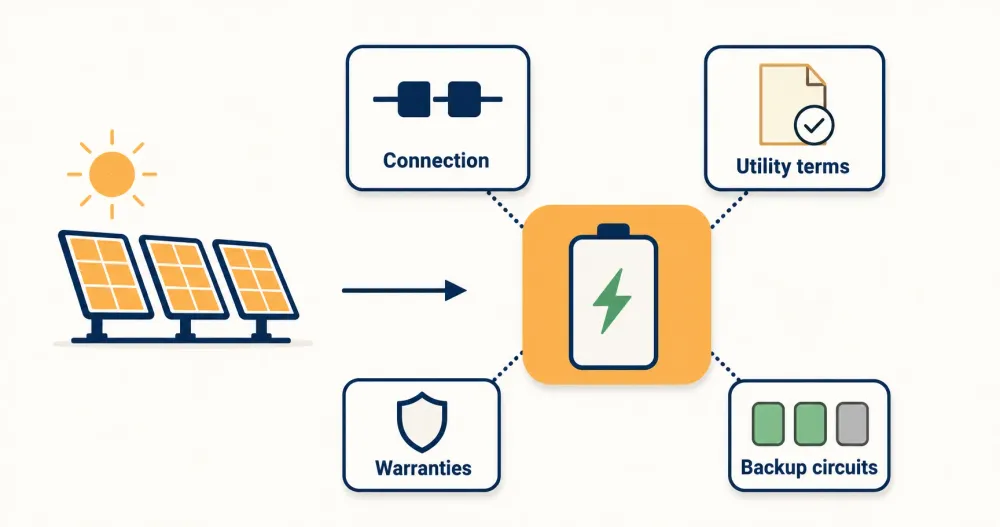
Yes, you can usually add a battery to existing solar, and the battery is rarely the hard part. Searches for "add battery to existing solar" tend to land on battery sellers, but the decisions that matter sit around the battery: how it connects to the system you already own, whether the change alters your utility agreement or net metering status, what it does to the warranties you already hold, and which circuits it will actually keep running in an outage. A retrofit means a new permit, a new inspection and often a new utility application, all handled by a licensed electrician or installer.
This page covers US homeowners with grid-tied solar that is already running. It is a buyer's guide to the decision, not installation guidance.
Before any battery quote, find your paperwork. If you bought the system with cash or a loan, you own it and you decide. If the panels are leased or you are on a power purchase agreement, a solar company owns the equipment on your roof, and the contract governs what may be connected to it. Adding a battery from another company may need the system owner's written consent, and doing it without that consent can put you in breach of the contract.
Owners with a loan should also check the loan documents. Some solar loans are secured by the equipment, and a lender may have a say in modifications.
There are two basic ways to add a battery to existing solar, and the proposal should say which one it is.
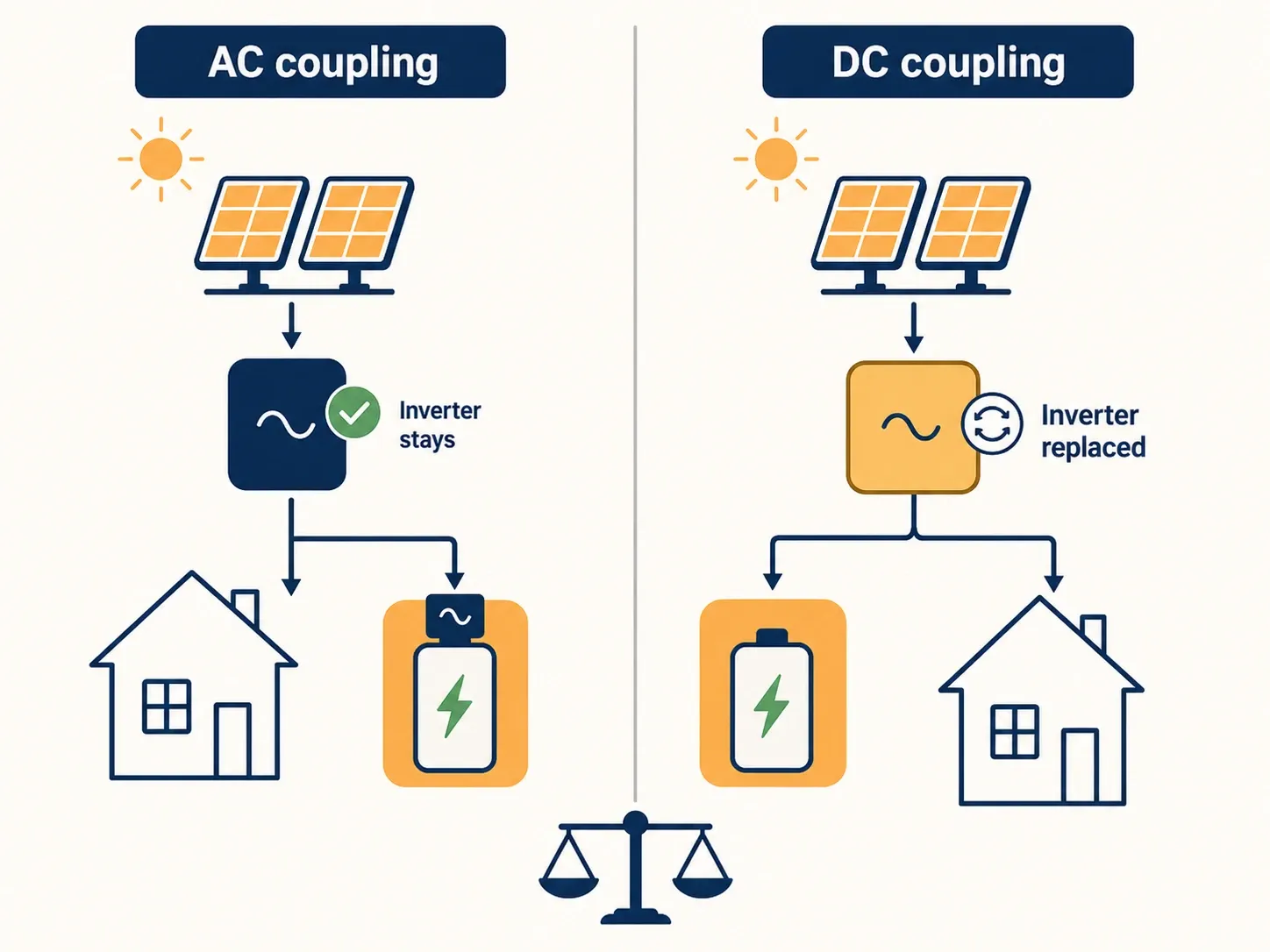
Neither is automatically right. An inverter that is late in its working life changes the math, because replacing it anyway may make a DC-coupled design more reasonable. An inverter with years of warranty left is a reason to be wary of any design that removes it. Ask the installer to explain, in writing, why they chose the method they did for your system.
This is the question people assume the answer to, and it is where a retrofit can disappoint. An ordinary grid-tied solar system shuts down when the grid fails, so it does not send power into lines that utility crews are working on. Adding a battery does not automatically change that.
Whether your existing panels keep producing and recharging the battery during an outage depends on how the battery system is designed and whether it supports the solar equipment you already have. Some retrofits keep the panels working through an outage; some only run the house from the battery until it is empty. Ask directly: "During a multi-day outage, will my existing panels recharge this battery?" and get the answer in the proposal.
Most battery retrofits do not back up the whole house. They back up a selected set of circuits, often moved onto a separate essential-loads panel. That stretches the stored energy, and it sets a hard limit on how much can run at once.
If the backed-up circuits draw more than the battery system can supply, for example when a well pump, central air and an electric range start together, the system protects itself by tripping or shutting down. The outage you bought the battery for is when you find out. Which circuits get backed up, whether they can run together, and whether your main panel can take the new equipment are decided by a licensed electrician with a load calculation, not by the homeowner. Do not move circuits between panels or add loads to the backed-up panel yourself, and ask for a written list of what is backed up and which large appliances the system can and cannot start.
A battery changes what is connected to the grid, so most utilities want to know about it. Expect a new or amended interconnection application, and in some places extra equipment or an inspection before the utility approves the change.
The bigger question is your net metering status. Many older solar customers are on a net metering arrangement that is more generous than what new customers get today, and modifying the system can put that at risk. Utilities write the rules into their tariffs, and the rules differ by utility and state. As one example, PG&E's net energy metering program page (read September 27, 2026) describes a specific form for customers "modifying their existing NEM 1 system within 10%/1kW of the original system size," and warns customers on a closed rate schedule that "if you choose a new rate schedule, you can't return to the closed-rate schedule in the future."
That is one utility's wording on one day, not a rule for your home. Before signing anything, ask your own utility in writing whether adding a battery, with no new panels, changes your net metering status or your rate, and keep the answer. Be especially careful with quotes that add panels at the same time as the battery, because extra generating capacity is where legacy status is most often tested. California owners can read more in how long a legacy NEM rate is protected.
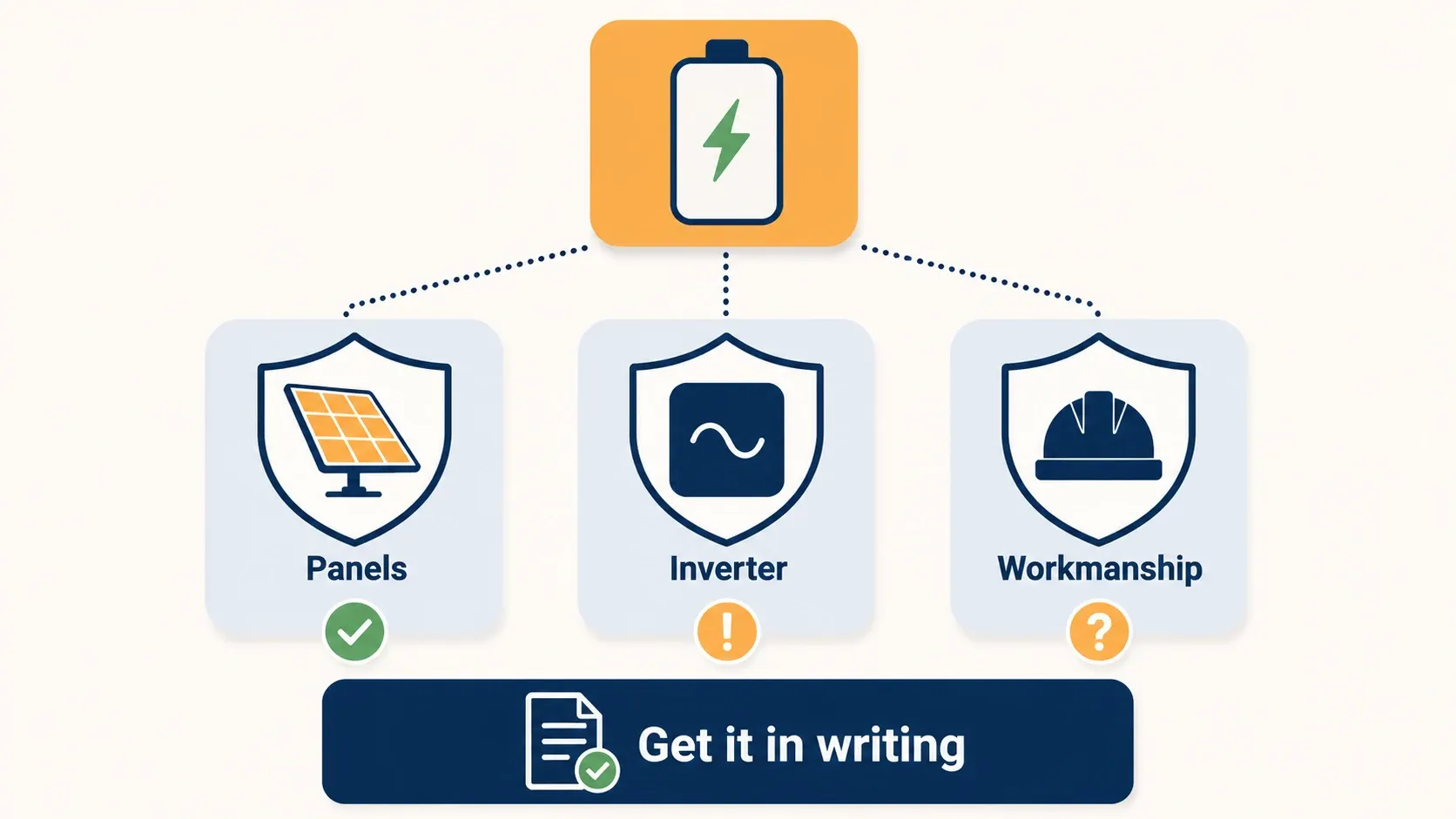
A system you already own carries several warranties at once, and a retrofit touches each differently.
Ask the new installer to confirm in writing that their design will not void the warranties you hold, and to name any warranty it does affect. If your original installer has closed, warranty claims go to the manufacturers, and checking whether an installer will still exist applies to the new company too.
A battery retrofit means a permit, and a permit means an inspector looks at your electrical panel and the existing solar equipment. If anything about the original installation is not to code, it can surface now and have to be corrected before the battery is approved. That is good for your safety, and it can add cost that was not in the battery quote. Ask the installer whether their price includes correcting existing issues found at inspection, or whether those will be quoted separately.
We do not quote an average retrofit price, because it depends on the battery size, the coupling method, panel work, and local permit and utility fees, and a single figure would mislead most readers. A complete quote should itemize the battery, any new inverter, any essential-loads panel, main panel work, permits, utility fees and inspection.
Incentives shifted as well. The federal residential credit that older retrofit guides still quote has ended, and what changed when the federal solar tax credit expired explains the change. Some states and utilities run battery programs, often with conditions on how the battery is used; what you trade for a home battery rebate covers those terms.
A battery retrofit is an easy sale because the customer already believes in solar. The pitch tends to skip the utility agreement, the warranties and the outage behavior, because each one is a reason to slow down. None of them is a reason not to add a battery. They are reasons to get four answers in writing first: who owns the system, what the utility says about your status, which warranties the design affects, and what stays on in an outage.
Usually, yes. Most grid-tied systems can take a battery, most often through AC coupling, which leaves the existing equipment in place. A licensed installer confirms compatibility, and leased or PPA systems need the system owner's consent.
It can. Many utilities require a new or amended interconnection application, and rules on legacy net metering status differ by utility. Ask your utility in writing before signing, especially if new panels are being added at the same time.
Not automatically. Panel warranties are separate from the battery, but inverter warranties and the original installer's workmanship warranty can be affected by the design and by who does the work. Get the new installer's written confirmation.
Only if the battery system is designed to support your existing solar equipment in an outage. Some retrofits keep the panels producing, and others run only from stored energy. Ask for the answer in the proposal.
No. Adding a battery involves your main electrical panel, a permit, an inspection and usually a utility application. It is work for a licensed electrician or licensed solar installer.
One email a week with new guides, tips, and solar news. Zero fluff, no sales pitch.