Time of Use Battery Savings: Does the Math Add Up?

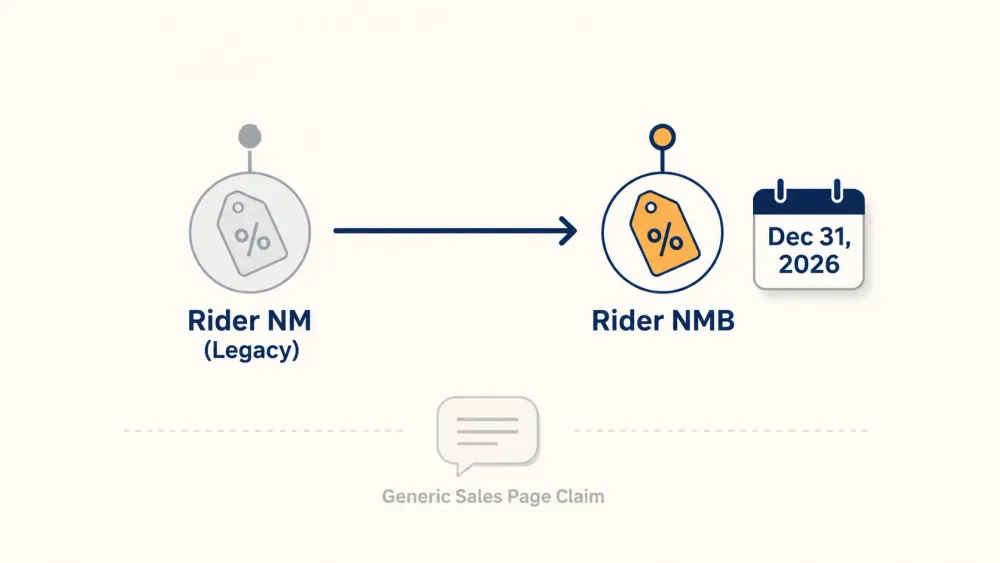
The "bridge rate" is Rider NMB, the Net Metering Bridge rider, offered to Duke Energy residential solar customers in North Carolina. According to the North Carolina Utilities Commission Public Staff, Rider NMB became effective on October 1, 2023, does not require the customer to take service under a time of use rate schedule, is open to a limited number of customers each year, and lets a customer stay on it for up to 15 years from the date of their interconnection request application. December 31, 2026 is the date the Public Staff identifies for existing legacy Rider NM customers to automatically transition onto Rider NMB. That is a different event from the one most sales pages describe.
Sources for this article were verified against the North Carolina Utilities Commission Public Staff's published materials at the time of writing. This is general information about North Carolina tariffs. It is not financial advice, not a recommendation to install or to hurry, and not a statement about your account. Confirm anything here with Duke Energy or the NCUC before acting.
Duke Energy serves customers in several states. The bridge rate described here is a North Carolina construct, applicable to Duke Energy Carolinas and Duke Energy Progress in North Carolina. The Public Staff page covering it does not extend to South Carolina, and it has nothing to do with Duke's operations in other states.
So "I'm a Duke customer, does the bridge rate apply to me" has no single answer. If your account is not a North Carolina residential account with Duke Energy Carolinas or Duke Energy Progress, this page is background reading, not your rules.
North Carolina's residential solar customers sit on one of three riders. Getting these straight is most of the work.
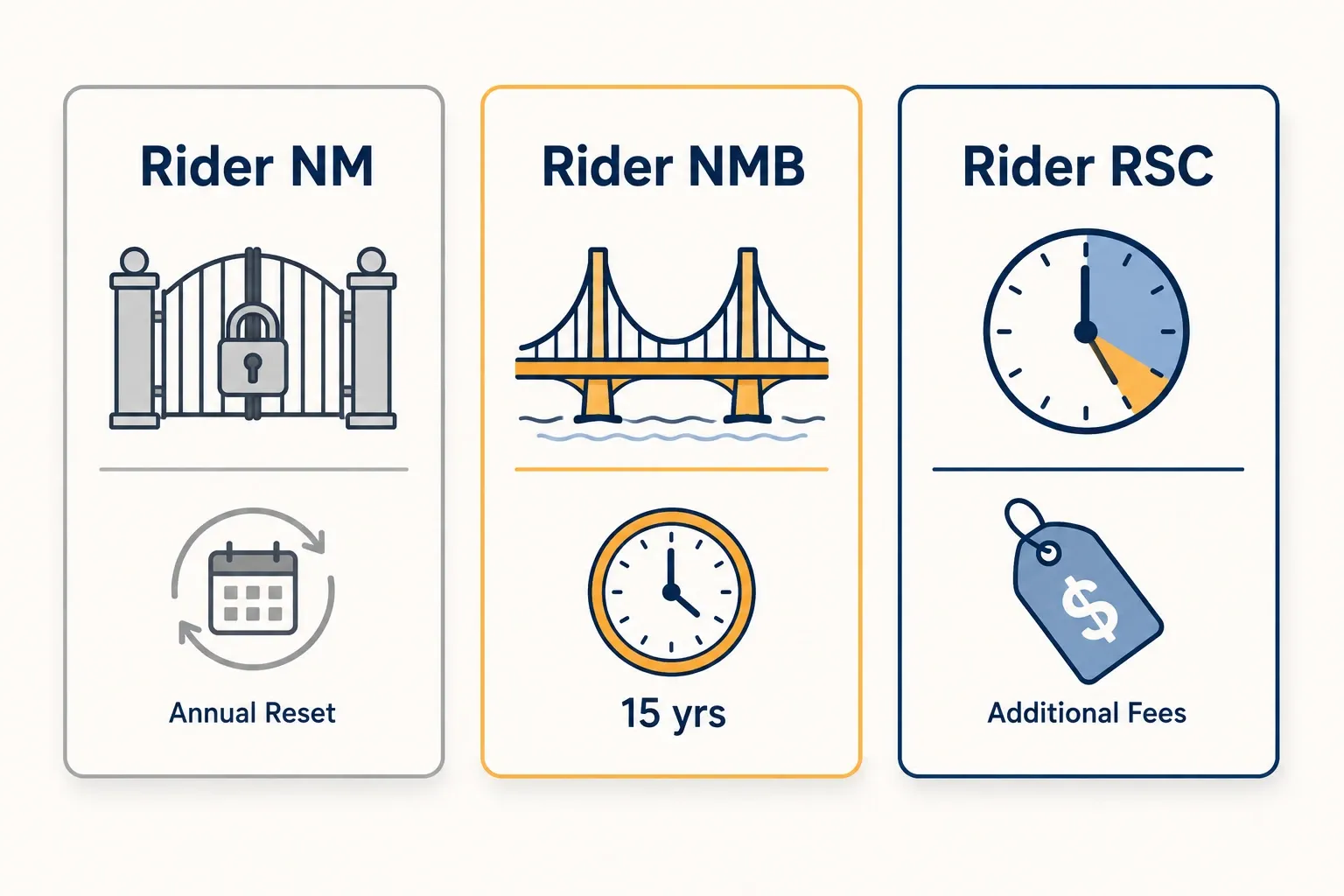
| Rider | What it is | Key terms per the NC Public Staff |
|---|---|---|
| Rider NM | The legacy net metering rider | Closed to new customers as of September 30, 2023. Credits accumulate monthly but reset annually, on June 1 for Duke Energy Carolinas and May 31 for Duke Energy Progress |
| Rider NMB | The Net Metering Bridge, the "bridge rate" | Effective October 1, 2023. No time of use requirement. Limited annual enrollment caps. Up to 15 years from the interconnection request application date, then transition to Rider RSC or the applicable tariff |
| Rider RSC | Residential Solar Choice | Effective October 1, 2023. Requires service under a time of use with critical peak pricing schedule. Introduces a minimum monthly bill, non bypassable charges for storm recovery and cyber security costs, and a grid access fee for systems above 15 kW AC. Excess energy credited monthly at the utility's avoided cost rate |
The Public Staff describes Rider NMB as the result of a stipulation between Duke Energy and rooftop solar installers, and describes it as similar to Rider RSC except that customers are not required to take service under the time of use with critical peak pricing schedule.
That exemption from mandatory time of use pricing is the substantive thing the bridge rate gives you. It is not a promise of retail rate export credits.
Search this topic and you will find a consistent framing: a countdown, an urgent deadline, and a call to get your interconnection application in before the bridge rate is gone forever. The framing appears almost exclusively on the websites of companies that sell solar installations.
Here is what could be confirmed from the state agency's own page, and what could not.
Confirmed. The Public Staff states that existing Rider NM customers can remain on that plan until December 31, 2026, at which point they will automatically transition to Rider NMB. That is a transition onto the bridge rate, and it applies to people who already have solar under the closed legacy rider. Nobody in that group needs to do anything to hurry.
Confirmed. Rider NMB is open to a limited number of customers each year, and when that limit is reached, new customers are required to take service under Rider RSC instead. So there is a real scarcity mechanism, and it is an annual capacity cap, not a single end date.
Not confirmed from a primary source at the time of writing. The widely repeated claim that Rider NMB itself closes permanently to new applicants after December 31, 2026, with new participants unable to join from January 1, 2027. That statement appears on numerous installer pages. It did not appear in the Public Staff material reviewed for this article. It may well be correct and recorded elsewhere in the NCUC docket or in Duke's filed tariff. It is not something this page will assert on the strength of sales pages.
What to do with that. If your decision turns on that date, do not take it from an article, including this one. Ask Duke Energy directly, in writing, whether Rider NMB remains open to new residential applicants, what this year's remaining capacity is, and what the deadline is for a complete interconnection application. Those are three specific answerable questions and you are entitled to the answers before you sign anything.
The reason this topic produces so much confusion is that there are two clocks running and most coverage collapses them into one.
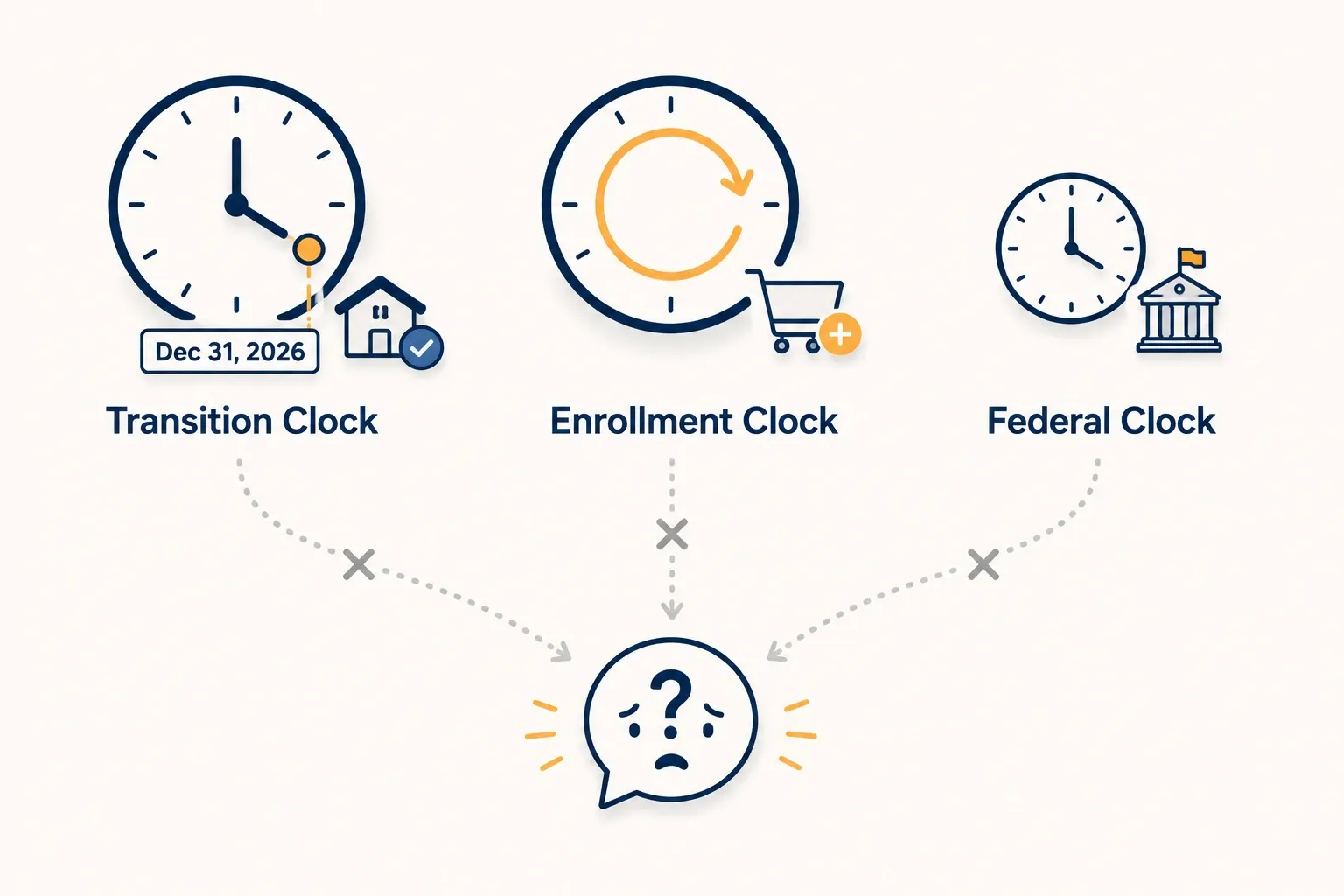
Clock one, the transition clock. December 31, 2026. It applies to people already on legacy Rider NM. It moves them onto Rider NMB automatically. It is not an action item for them, though it is worth understanding what changes about their credit treatment when it happens, which is a question for Duke.
Clock two, the enrollment clock. An annual capacity cap on Rider NMB, first come first served, with overflow going to Rider RSC. It applies to people considering solar now. It is not a date, it is a queue, and it resets on the program's own annual cycle.
If you are an existing solar owner, clock one is yours and clock two is irrelevant. If you are shopping, clock two is yours and clock one has been mis-sold to you as urgency. Almost every "act now" page in this SERP is showing shoppers a date that belongs to somebody else.
There is a third clock people conflate with both: the federal one. The residential Section 25D credit expired at the end of 2025, and that is a separate matter from any North Carolina tariff. Is There Still a Federal Solar Tax Credit in 2026? covers it, and The Solar Tax Credit Expired: What Now? covers what changed for buyers.
Take the answers into your own math rather than into a proposal. Does Your Electricity Rate Decide Whether Solar Is Worth It covers working out your true import rate, and Solar Payback Period: How to Calculate Yours, Not the Average covers where an export credit belongs in a payback calculation. If you want the underlying mechanism first, Net Metering Explained for US Homeowners is the plain version.
This page carries no export rate, no minimum bill amount, no grid access fee figure and no estimate of what any rider is worth to a household, because those are tariff numbers that change and belong in a filed document rather than an article. It also states clearly where the popular version of this story could not be confirmed. If the NCUC docket or Duke's tariff establishes a hard close date for Rider NMB, that is a correction this page should carry, and it should carry it with the document reference attached.
What is Duke Energy's solar bridge rate? It is Rider NMB, the Net Metering Bridge rider, available to Duke Energy residential solar customers in North Carolina. The NC Utilities Commission Public Staff describes it as similar to the Residential Solar Choice rider except that customers are not required to take service under a time of use with critical peak pricing schedule.
What happens on December 31, 2026? According to the NC Public Staff, existing legacy Rider NM customers can remain on that plan until December 31, 2026, at which point they automatically transition to Rider NMB. Claims that the bridge rate itself closes to all new applicants on that date could not be confirmed from that source and should be verified with Duke Energy or the NCUC.
How long does the bridge rate last? The Public Staff states customers can stay on Rider NMB for up to 15 years from the date of their interconnection request application, after which they move to Rider RSC or whichever tariff applies at that time.
Can I still get on the bridge rate? It is open to a limited number of customers each year, and when the annual limit is reached, new customers are required to take service under Rider RSC. Ask Duke Energy directly what capacity remains before assuming availability.
Does the bridge rate apply to Duke customers outside North Carolina? The Public Staff material covering these riders addresses Duke Energy Carolinas and Duke Energy Progress in North Carolina and does not extend to South Carolina. Duke serves customers in other states under different rules, so confirm with your own Duke operating company.
One email a week with new guides, tips, and solar news. Zero fluff, no sales pitch.